

Meet The Team
The Myers Hutchings Fisheries Centre’s interdisciplinary team connects fisheries science with ecology, data analytics, management, policy, & more to address complex challenges facing fisheries & marine ecosystems. Meet the people driving research, collaboration, & innovation at the MHFC.

Co-Director
Joanna Mills Flemming
Dr. Joanna Mills Flemming is a Professor of Statistics at Dalhousie University whose research sits at the intersection of statistics, marine ecology, and fisheries science. She develops statistical methods and computational tools that make it possible to learn from increasingly complex ecological data, from animal tracking and acoustic telemetry to fisheries and high-resolution spatial data, and to translate those data into better science for the conservation and sustainable management of marine resources. Joanna is particularly interested in problems where space and time matter: understanding how marine animals move, how populations change and redistribute, and how uncertainty can be properly accounted for when making management decisions. Her work spans state-space and spatio-temporal models, fisheries stock assessment, animal movement, and close-kin mark-recapture methods for estimating population size. Collaboration is at the heart of her research, and she works closely with ecologists, fisheries scientists, government researchers, and industry partners. Joanna was awarded the Statistical Society of Canada’s 2024 Award for Impact of Applied and Collaborative Work in recognition of her contributions to marine ecology and fisheries science and her leadership in building collaborations between statisticians and marine scientists. More recently, she helped develop Dalhousie’s new Master of Fisheries Science program, designed to train the next generation of fisheries professionals in modern quantitative methods. Joanna is a proud Nova Scotian who feels fortunate to live and work close to the ocean that inspires so much of her research. Outside of work, she loves running and spending time with her family and community.


Co-Director
Aaron MacNeil
Dr. Aaron MacNeil is a marine ecologist at Dalhousie University whose research focuses on small-scale fisheries, climate change, and the conservation and sustainable use of marine resources. Originally from Wolfville, Nova Scotia, he uses statistical approaches to integrate knowledge across disciplines and better understand the ecological and human dimensions of fisheries. Aaron has worked extensively in coral reef ecosystems throughout the Indo-Pacific and applies insights from this research to a wide range of fisheries and conservation challenges in Nova Scotia and beyond. His research interests include environmental disturbance, human impacts, fisheries livelihoods, seafood trade, and fisheries decision-making. His work brings together ecological and social perspectives to address practical challenges facing fisheries and the communities that depend on them. Aaron has been recognized for his contributions to fisheries science and interdisciplinary research, including as a Member of the New College of the Royal Society of Canada and as a recipient of the Fisheries Society of the British Isles Medal and a Eureka Prize for interdisciplinary research. He currently leads the Integrated Fisheries Lab at Dalhousie University.


PhD Student
Matthew Durant
Matthew Durant is a PhD student at Dalhousie University whose research focuses on understanding how climate change and environmental variability influence the distribution, recovery, and conservation of marine species. He uses spatial modelling and quantitative approaches to examine how marine populations respond to changing environmental conditions and how this information can support conservation and fisheries management. Matthew’s PhD research focuses on how environmental change influences lobster population dynamics and fisheries in Atlantic Canada. He has also worked with Fisheries and Oceans Canada on species distribution modelling, fisheries surveys, biodiversity, and marine conservation. Before beginning his PhD, Matthew completed an MSc at Tohoku University in Japan, where he studied the potential impacts of climate change on Pacific bluefin tuna in the North Pacific Ocean. His work reflects a broader interest in understanding how changing environmental conditions shape marine populations and how quantitative approaches can contribute to effective conservation and fisheries management.

GIS Technician & Analyst
Vicki Gazzola
Vicki has been part of the MHFC since its launch in 2026. Having worked across government, industry, and academia, she brings 20 years of experience in cartography, ocean mapping, spatial analysis, and marine research. Her experience includes offshore exploration on research expeditions and developing maps, visualizations, and interactive online tools that make complex marine and spatial data easier to understand. At the MHFC, Vicki works with academic, government, industry, Indigenous, and other partners to support the integration and sharing of spatial data. She also contributes to communications, website development, training materials, grant applications, and administrative activities. Through her interdisciplinary role, Vicki helps connect data, research, and people to support innovative fisheries science and informed decision-making. With a lifelong love of the ocean, she is happy to contribute to research that helps us better understand and shape the future of our shared marine environments.

DFO Research Scientist
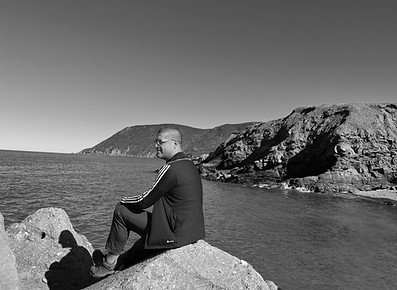
David M. Keith
Dr. David M. Keith is a Research Scientist with Fisheries and Oceans Canada (DFO) and the Myers Hutchings Fisheries Centre. He is also an instructor in Dalhousie University’s Master of Fisheries Science program. He has worked with DFO for more than a decade, developing stock assessment methods for a variety of species, with a particular focus on sea scallop. David’s research focuses on understanding how fishing and natural variability interact to influence marine fish populations and why some populations are more productive, resilient, or capable of recovery than others. His work explores how population structure, habitat, and spatial and temporal variability influence population dynamics. David is also interested in finding new ways to make better use of existing data, particularly through the development of quantitative models that address practical challenges in fisheries science and management. His work brings together statistical modelling and fisheries knowledge to support better understanding and decision-making.


Research Scientist
Ethan Lawler
Dr. Ethan Lawler is a Research Scientist whose work focuses on spatio-temporal statistics, scientific computation, and quantitative modelling in fisheries science. He completed his PhD in Statistics at Dalhousie University in 2022, specializing in spatio-temporal statistics, before completing an interdisciplinary postdoctoral position in Statistics and Oceanography. During his postdoctoral research, Ethan worked with Clearwater Seafoods and Fisheries and Oceans Canada (DFO) to develop a high-resolution spatial stock assessment model for Arctic surfclam on Banquereau Bank and Grand Bank in Atlantic Canada. His research has resulted in publications spanning mathematics, statistics, and fisheries science, with a strong focus on scientific computation and spatio-temporal modelling. Ethan is also a recognized expert in Template Model Builder (TMB), a software framework for statistical modelling, and has taught development courses to fisheries scientists. Outside of his research, Ethan is an avid musician who plays traditional jigs and reels on tenor banjo and classical trombone in several Halifax-area groups. He also enjoys science fiction and playing hockey.
Our Collaborators
Fisheries research is stronger when people bring different perspectives, expertise, & experience to the table. The Myers Hutchings Fisheries Centre collaborates with researchers, practitioners, students, & other experts across disciplines & sectors to share knowledge, develop new ideas, & tackle complex challenges facing fisheries & marine ecosystems. Meet the collaborators working alongside the MHFC to advance research, innovation, & practical solutions.

Professor & Graduate Coordinator
Department of Biology, Dalhousie University
Daniel Ruzzante
Close-Kin Mark-Recapture (CKMR) & Epigenomics
A first goal in conservation biology and fisheries management alike is to know how many individuals there are in a population. Current methods of estimating population abundance (Nc), such as aerial surveys and traditional mark-recapture, can be effort/time intensive and are subject to biases and uncertainties. Close-kin mark-recapture is a genomic method for estimating Nc, relying on the idea that offspring “recapture” their parents’ genotypes through inheritance. We are currently using CKMR to estimate Nc for Atlantic halibut (Hippoglossus hippoglossus) Additionally, since using CKMR requires an accurate age estimation, we are also developing and calibrating epigenomic ageing clock for halibut.
Our Partners
Addressing today’s fisheries challenges requires collaboration!
The Myers Hutchings Fisheries Centre works with partners across academia, government, Indigenous communities & organizations, industry, NGOs, & other sectors to connect expertise, share knowledge, & advance practical, evidence-informed solutions.


